Why Your Deck Turned Gray (and What's Actually Underneath)
The gray coating on a weathered deck is dead surface fiber, not a sign the wood is ruined, and it's usually fixable with a proper wash and refinish.
September 22, 2026 · 4 min read
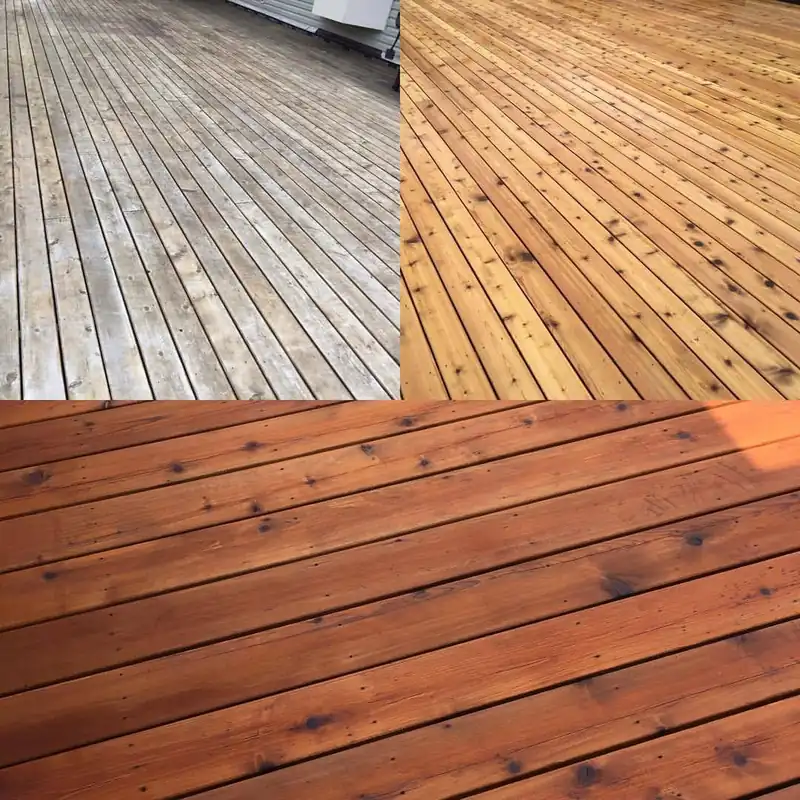
The Gray Isn't Dirt, It's Weather
Every deck in Olney and the surrounding Montgomery County towns starts out the same color: warm, freshly cut wood, whether that's pressure treated pine, cedar, or something harder. Given a few years outside, that same wood turns a flat, chalky gray. Homeowners in Bethesda and Silver Spring call us about this all the time, and the first question is usually the same: is the wood ruined? Almost never. What's changed is the surface, not the structure underneath.
What's Actually Happening to the Wood
Wood is made of long fibers held together by a natural glue called lignin. Sunlight, specifically UV light, breaks that lignin down at the surface over time. As it breaks down, the fibers lift and separate slightly, and they lose the pigment that gave the wood its original color. What you're left with is a thin layer of dead, UV burned fiber sitting on top of perfectly good wood. That layer scatters light differently than fresh wood does, which is why it reads gray to the eye even though nothing about the tree's actual grain has changed.
Rain adds to it. Water gets into that same weakened surface layer, swells it, and then it dries out and shrinks again. Do that enough times over a Maryland summer and winter and the surface starts to feel a little fuzzy or soft to the touch, even while the board underneath is still solid.
Mildew Is a Second, Separate Problem
On top of the UV weathering, a lot of decks in shaded yards or under tree cover pick up mildew. It shows up as gray to black speckling or blotching, and it gets confused for the natural graying, but it's actually a living organism feeding on the wood surface and whatever has collected on it. Mildew likes damp, shaded spots, so it tends to show up worse on the north side of a house or under a big oak. It isn't dangerous to the wood the way rot is, but it does make an already gray deck look dirtier and darker than it needs to.
It's worth checking the underside of the boards too, and the framing where airflow is poor. Mildew often takes hold there before it's visible on top, simply because that space stays damp longer after a rainstorm and gets less sun to dry it out. A deck that looks only mildly gray on the walking surface can have a noticeably heavier buildup underneath, which is one more reason a full wash matters more than spot cleaning the parts you can see from a lawn chair.
What a Real Restoration Involves
Restoring a grayed deck starts with getting that dead surface layer off, not just knocking dust off the top. That usually means a wash with the right pressure and the right cleaning agents to lift both the weathered fiber and any mildew growth. We use Earth Friendly Detergents for this specifically because they clean effectively without being harsh on the plants and soil around the deck. Once the wood is clean, it needs to dry out fully, because trapping moisture under a fresh finish is how problems start.
After it dries, the wood gets brightened and prepped, then stained and sealed. The stain does two things: it puts color back into the wood, and it puts UV protection back on top of it, which is what slows the graying process down the next time around. We've brought back decks well past their late twenties, boards most people had already written off as done, and the wood underneath was fine the whole time.
A lot of homeowners try a shortcut first, a quick rinse with a garden hose or a low powered attachment, hoping it will knock the gray off on its own. It won't, because a rinse alone doesn't remove that dead surface fiber, it just wets it down temporarily. The wood looks a shade darker for a day or two while it's damp, then dries right back to the same flat gray it was before. Getting past that surface layer takes the right pressure paired with a cleaning solution, not water pressure alone.
- Check for soft or spongy spots. That's a structural question, not a color one.
- A deck that's gray but still solid to a firm push is almost always a restoration candidate, not a tear out.
- Shade and moisture speed up both graying and mildew, so a covered deck often needs attention sooner than one in full sun.
When to Call It In
If your deck in Olney, Gaithersburg, or anywhere nearby has gone gray, the honest answer is usually that it needs a proper wash and refinish, not a rebuild. Kurt has been doing this kind of restoration since 1985, and it's still the most common call we get: a deck that looks finished but is actually just weathered on the surface. If you want an honest look at what's going on with yours, call 240-372-7267 for a free consultation and we'll tell you straight what it needs.
TS Pressure Washing & Deck Restorations, 240-372-7267
Call 240-372-7267More articles
Cedar and Ipé Decks Need a Different Touch Than Pine
Cedar and Ipé decks reward a gentler, wood specific approach to cleaning and re-finishing than standard pressure treated pine ever needs.
Black Mold on Retaining Walls: Timber vs. Block, and How It Gets Cleaned
Timber and block retaining walls go black from mold and mildew, not dirt, and cleaning them right means protecting the joints and the soil behind them.