Black Mold on Retaining Walls: Timber vs. Block, and How It Gets Cleaned
Timber and block retaining walls go black from mold and mildew, not dirt, and cleaning them right means protecting the joints and the soil behind them.
September 22, 2026 · 3 min read
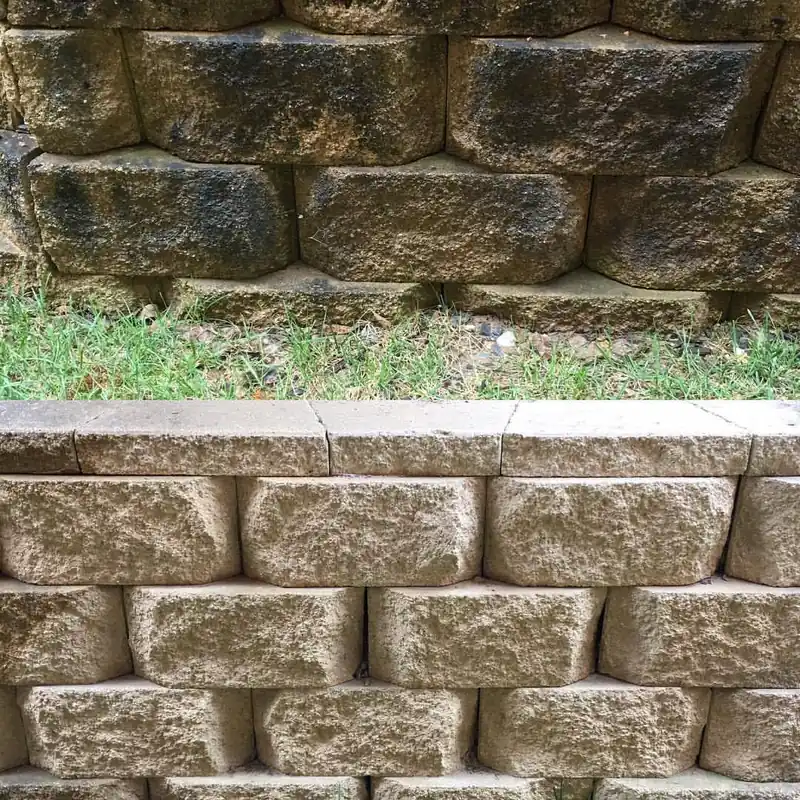
Two Different Walls, Same Black Buildup
Retaining walls around Olney and Silver Spring come in two common types: timber, usually pressure treated pine stacked and pinned into a hillside, and segmental block, the interlocking concrete units you see holding back a slope or framing a raised bed. Both types end up with the same complaint eventually: a black or dark green film building up across the surface, especially anywhere the wall stays shaded or damp.
Where the Black Actually Comes From
That black coating is mold and mildew growth, not dirt or staining from the soil behind the wall. Retaining walls are naturally damp environments. They hold back earth that's full of moisture, they often sit in partial shade against a slope or under trees, and water runs down their face every time it rains. That combination, shade, moisture, and a porous surface to grip onto, is exactly what mold needs to take hold and spread. Timber walls tend to show it as a black or gray green film across the grain. Block walls often show it worse in the mortar joints and in any texture on the block face, since that's where moisture sits longest.
Why You Can't Just Blast It Off
The obvious instinct is to hit it hard with a pressure washer and get it off fast, but that's the wrong move on both wall types. On a block wall, too much pressure aimed into the joints can push water and force behind the blocks themselves, which is the last thing you want on a wall that's doing structural work holding back soil. On a timber wall, overly aggressive pressure tears into the wood grain the same way it does on a deck, leaving a rough, damaged surface that grows mold back faster than before, not slower.
The soil behind the wall matters too. Retaining walls exist specifically to hold that soil in place, so a cleaning method that disturbs it, whether by blasting through joints or eroding the base, undoes the whole point of the wall. The right approach uses controlled pressure and a cleaning solution that does the actual work of killing and lifting the mold, rather than relying on brute force.
Walls right next to garden beds, lawns, or a vegetable patch add another layer to think about. Whatever runs off the wall during cleaning ends up on the plants and soil below it, sometimes within inches. A harsh chemical approach can do real damage there even if the wall itself comes out clean, which is exactly the kind of tradeoff nobody wants after paying to have a wall cleaned.
Cleaning It the Right Way
We use Earth Friendly Detergents on retaining wall jobs for the same reason we use them everywhere else: they break down mold and mildew effectively without being harsh on the plants, grass, and soil right next to the wall, which on a retaining wall job is often inches away from the cleaning itself. The detergent does the work of lifting the mold, and the pressure washing that follows is set to clean the surface, not blast into joints or strip material off the wall face.
The end result looks different depending on the wall. A timber wall that's gone black over fifteen or more years comes back to its natural honey brown color, grain visible again instead of hidden under a dark film. A block wall shows the change just as clearly, especially when only part of it has been done, a sharp line between the still dark upper section and the section that's been washed back to its original gray or tan. Either way, the transformation tends to surprise people who assumed the discoloration was permanent.
- Timber walls need lower pressure to protect the wood grain, similar to deck cleaning.
- Block walls need pressure kept off the joints so water isn't forced behind the units.
- Shaded, damp walls will build the black film back faster and may need attention more often than a wall in full sun.
Getting It Back to Good
We've cleaned timber and block retaining walls across Olney, Bethesda, and North Bethesda that had gone black from mold buildup, and in most cases the wall comes back looking close to new once that film is properly lifted, whether it's a timber wall going from black back to honey colored wood or a block wall getting its top half washed to match the clean bottom half. If your retaining wall has gone dark and you want it cleaned without risking the wall itself, call Kurt at 240-372-7267 for a free consultation.
TS Pressure Washing & Deck Restorations, 240-372-7267
Call 240-372-7267More articles
Why Your Deck Turned Gray (and What's Actually Underneath)
The gray coating on a weathered deck is dead surface fiber, not a sign the wood is ruined, and it's usually fixable with a proper wash and refinish.
Cedar and Ipé Decks Need a Different Touch Than Pine
Cedar and Ipé decks reward a gentler, wood specific approach to cleaning and re-finishing than standard pressure treated pine ever needs.