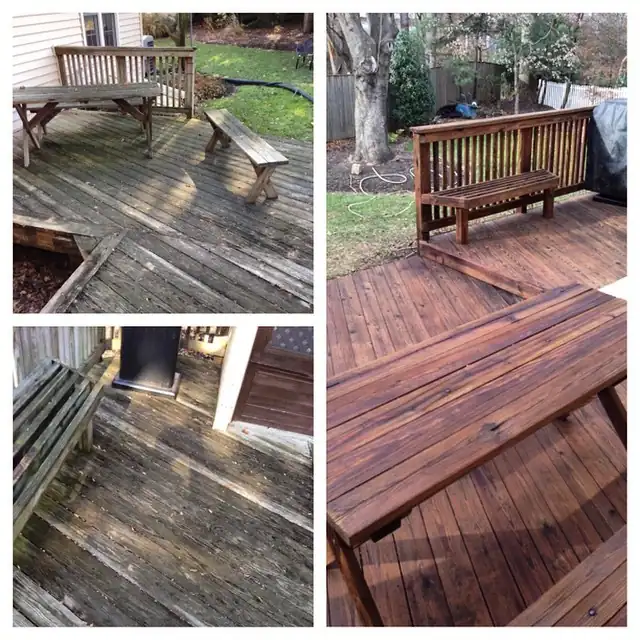
Deck resurfacing, Olney, MD
Deck Resurfacing: New Boards On a Sound Frame
When the decking itself is beyond saving but the frame underneath is solid, Kurt lays fresh pressure treated pine over what is already there instead of tearing the whole structure out.
Chapter 01
When the boards are gone but the frame is not
A deck earns a resurfacing instead of a strip and stain when the boards themselves have gone past saving: cupped, splintering, soft in spots, or split clean through, while the joists and beams underneath still test solid when you get down and check them. That gap between a tired deck and a failing structure is the whole judgment call. Board decay does not automatically mean the frame is bad, and a sound frame is worth building on rather than tearing out.
Kurt ran into exactly that on a deck built back in 1988. The old boards were done, but the frame held up fine, so he laid new pressure treated pine straight onto it instead of demolishing the whole structure. It is a common call to make around Olney and the surrounding towns, and it is one Kurt will make in person: call 240-372-7267 and he will look at what you have got before recommending a resurface over a rebuild.
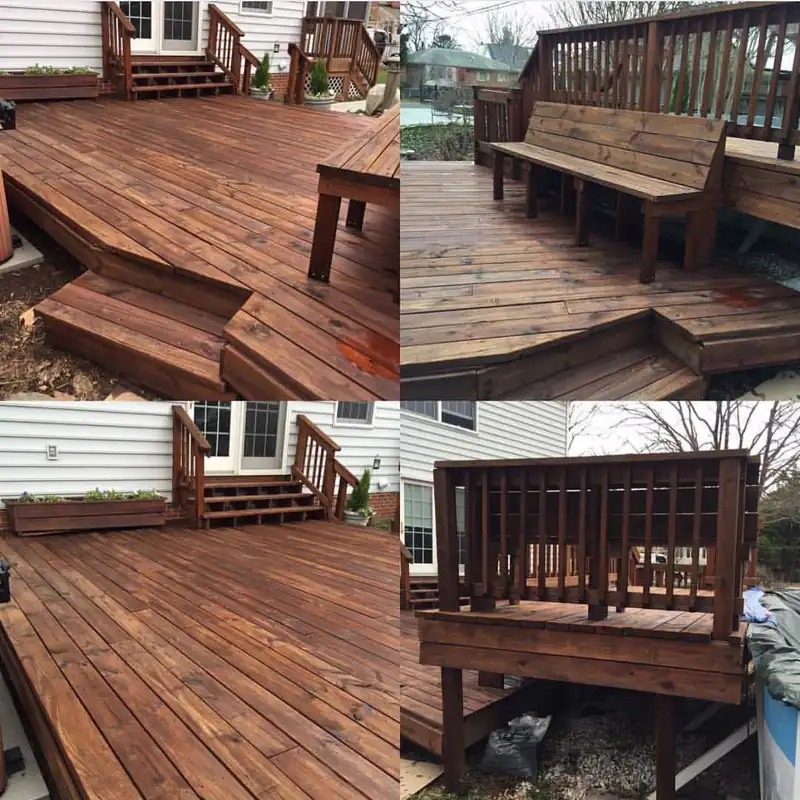
Finished multi-level deck with a built-in bench, resurfaced with new pressure treated pine and stained
Gapping and fastening new pressure treated pine
New pressure treated pine still has moisture in it when it goes down, so the gaps between boards get set with that in mind: too tight and the boards will crowd and cup as they dry, too wide and the deck looks unfinished before it has even weathered in. Fasteners get set in a straight, consistent pattern course after course, and the ledger and flashing against the house get a check while the old decking is off, since that is the one part of the job you do not want to redo later.
Working an existing frame instead of a new build means squaring off against what is already there. Every joist gets checked for level and for rot before a single new board is screwed down, because a resurfaced deck is only as good as the structure it is riding on. That is the part of the job that does not show in the finished photos but decides how long the new surface lasts.
Chapter 03
Letting new pine weather before it takes a stain
Pressure treated pine comes off the truck wet, with a mill glaze on the surface that keeps stain from soaking in properly. Put a finish on too soon and it sits on top of the wood instead of penetrating, and it will peel or wear unevenly within a season. The boards need real time outdoors first, exposed to sun and weather, so the surface opens up and the wood is actually ready to accept a stain rather than just wear one.
There is no fixed number of weeks that works for every deck. Humidity, sun exposure, and how the lumber was treated all change how fast it dries out, so the call on when to stain gets made by looking at the wood itself rather than a calendar. A deck rushed to stain too early ends up needing that work redone far sooner than one that was given the time it needed.
Boards past saving, frame still sound: Kurt laid new pressure treated pine on a deck's original 1988 frame instead of a full rebuild.