Cedar and Ipé Decks Need a Different Touch Than Pine
Cedar and Ipé decks reward a gentler, wood specific approach to cleaning and re-finishing than standard pressure treated pine ever needs.
September 22, 2026 · 4 min read
Not All Deck Wood Is the Same
Most decks around Montgomery County are built from pressure treated pine, and pine can take a fairly aggressive wash without much fuss. Cedar and Ipé are a different story. Both are premium woods that homeowners in Bethesda and North Bethesda choose specifically for their look and durability, and both need to be handled with more care than standard pine if you want them to keep looking the way they did when they went in.
People pay more for these woods for real reasons. Cedar has a warm, reddish tone and a natural resistance to insects that pine doesn't have on its own. Ipé is prized for how dense and long lasting it is, and for a deep, rich color that pressure treated pine simply can't match. Once a homeowner has made that investment, the last thing they want is a cleaning approach built around pine's tolerance for rough handling.
Cedar Is Soft, Even When It Looks Tough
Cedar has a natural resistance to rot and insects, which is part of why people pay more for it, but it's actually a softer wood than pine underneath that reputation. Blast it with too much pressure and you don't just clean it, you can chew into the grain itself, raise the fibers unevenly, and leave a fuzzy, damaged surface that never looks right again no matter what finish goes on top. Cedar needs lower pressure and more reliance on the cleaning solution doing the work, not the water alone.
We've restored cedar decks fifteen and twenty years old this way, cleaning them back to a finish ready surface without stripping away the wood itself. The goal is always to lift what's on top of the wood, not to remove any of the wood along with it.
Ipé Is the Opposite Problem: Incredibly Dense
Ipé is a tropical hardwood, dense enough that it barely floats in water, and it's about as far from pine as a deck board gets. Because it's so tight grained, it doesn't absorb finish the way softer woods do, and it doesn't weather the same way either. Ipé actually handles pressure washing better than cedar in terms of pure durability, but the challenge is different: getting a finish to take and hold on a wood that dense takes patience, not just spraying stain on and walking away. We've restored Ipé decks in the area, and the process is slower and more deliberate than a standard pine job, by design.
Why the Right Approach Matters More Here
With a premium wood, mistakes cost more, in both dollars and in how much of the original wood you lose. A pine deck that gets over pressured in one spot is forgiving; you can usually sand or refinish your way past it. Do the same thing to cedar or Ipé and you can leave a permanent mark in wood that was chosen specifically because it looks better than pine. That's really the whole argument for treating these woods differently: match the pressure and the process to the material in front of you, not one setting for everything.
It also helps to know the wood before starting, since cedar and Ipé can weather to look similar from a distance once they've both gone gray. Running a test pass on a small, less visible section first, a step or an end board, shows how the specific piece of wood is going to respond before committing to the whole deck. That one extra step is a small price for avoiding a mistake on a wood you can't easily replace board by board.
What Re-finishing Looks Like
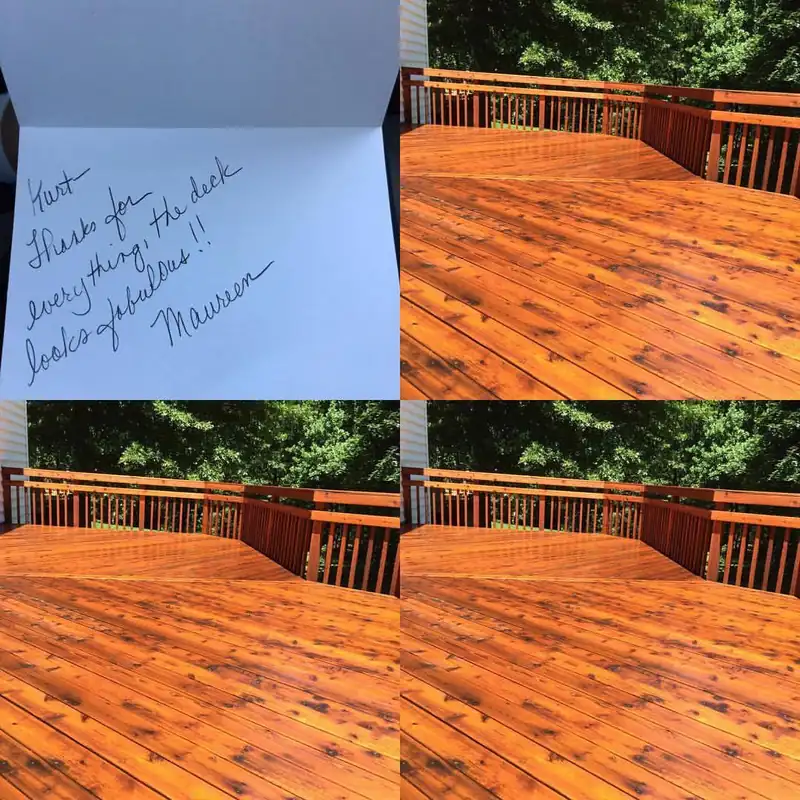
Once a cedar or Ipé deck is properly cleaned with the right pressure and Earth Friendly Detergents, it needs to dry fully before anything else happens. Cedar generally takes a stain the way you'd expect, soaking in and restoring its warm tone. Ipé is pickier, and getting a coating to bond and hold on a wood that dense is really the whole skill of the job. Either way, the goal is the same: bring the wood back to something close to its original color and grain, then protect it so the next round of upkeep is further out.
We've done this kind of work across Olney, Silver Spring, and Gaithersburg on decks homeowners specifically invested in because they wanted better than standard pine. It's worth getting a second opinion before anyone takes a pressure washer to a cedar or Ipé deck. If you've got one that needs attention, call Kurt at 240-372-7267 for a free consultation. He'll look at the wood in person and tell you what it actually needs before any work starts.
TS Pressure Washing & Deck Restorations, 240-372-7267
Call 240-372-7267More articles
Why Your Deck Turned Gray (and What's Actually Underneath)
The gray coating on a weathered deck is dead surface fiber, not a sign the wood is ruined, and it's usually fixable with a proper wash and refinish.
Black Mold on Retaining Walls: Timber vs. Block, and How It Gets Cleaned
Timber and block retaining walls go black from mold and mildew, not dirt, and cleaning them right means protecting the joints and the soil behind them.