How to Tell If an Old Deck Needs Restoring or Resurfacing
Whether an old deck needs a simple restoration or a resurfacing onto its existing frame comes down to the condition of the boards, not their color.
September 22, 2026 · 4 min read
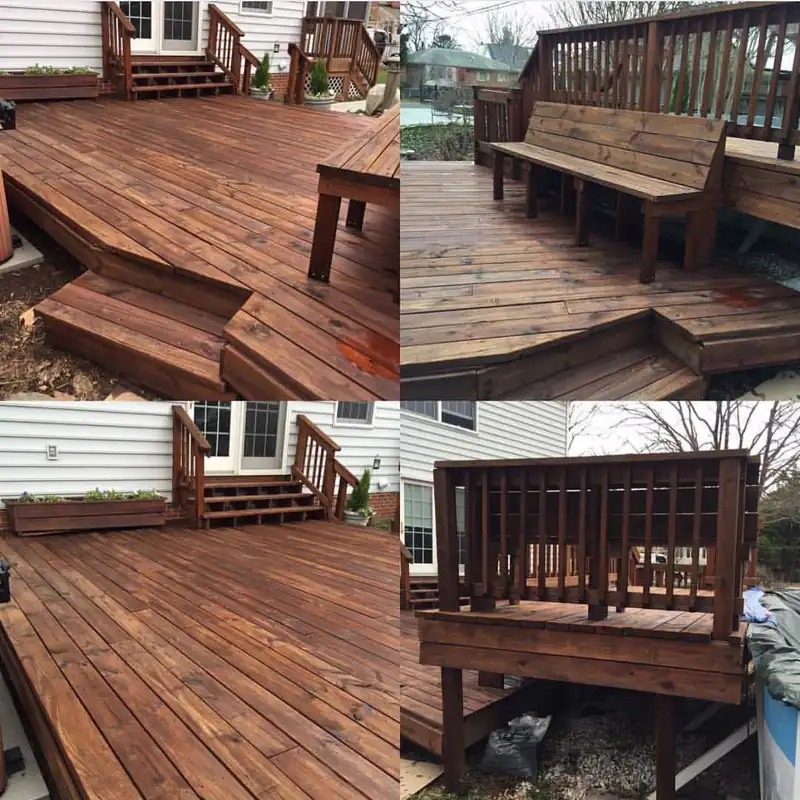
The Question Every Old Deck Raises
At some point every deck owner in Montgomery County ends up asking the same question: is this deck worth saving, or has it gone too far? The answer usually comes down to one thing, and it isn't the color of the wood. It's the frame underneath.
The Frame Is What Actually Matters
A deck's frame, the joists, beams, and posts everything else sits on, is built to last much longer than the decking boards on top of it, assuming it was built correctly and hasn't had a water or rot problem. We've worked on a deck with an original frame from 1988 that was still sound decades later, even though the decking boards on top had worn out and needed to be replaced. That's actually the normal pattern: the visible boards you walk on take the weather beating and wear out well before the frame underneath does.
Multi-level decks and decks with built-in features like a bench or a planter take this even further, since they've got more edges, more joints between sections, and more spots where water can sit after a storm. Those details often show wear on the boards first, while the framing that carries the whole structure keeps doing its job quietly underneath. It's one more reason a real inspection looks past the boards you'd notice walking across the deck.
When Restoration Is the Right Call
If the boards are gray, weathered, maybe spotted with mildew, but still solid when you press on them and free of soft or spongy spots, that's a restoration job. The wood fiber on the surface is dead and weathered, but the board itself is intact. Wash it properly, let it dry, stain and seal it, and you've got years more life out of boards that looked finished. We've restored decks close to thirty years old this way, and the wood came back looking like it had plenty of life left in it, because it did.
When Resurfacing Makes More Sense
Sometimes the boards themselves are past that point, splitting, soft, or cracking in a way no amount of cleaning and staining fixes, while the frame underneath is still solid. That's when it makes sense to pull the old decking off and lay new boards on the existing frame, rather than tearing out and rebuilding the whole structure. We did exactly this on a deck with an original frame from 1988: new pressure treated pine decking laid on top of that same sound frame. The homeowner got a deck that looks and feels new on top, without paying to replace a frame that never needed replacing.
That's really the value of resurfacing over a full rebuild: a sound frame is the expensive, labor intensive part of a deck to build correctly in the first place, and tearing one out that's still doing its job is wasted work and wasted material. New decking laid on an old frame, once it's fastened and gapped correctly, behaves like a new deck for the parts that actually take the daily wear, the surface you walk on, sit on, and look at.
How to Tell the Difference Yourself
A few honest checks go a long way before anyone calls a professional. Press firmly on the boards in a few spots, especially near the edges and anywhere water tends to pool. Look underneath if you can get access, and check the joists and posts for obvious rot, soft wood, or damage. Gray, dull color on its own tells you almost nothing about structural condition, it's a surface issue. Softness, cracking along the length of a board, or movement in the frame tell you something real.
Pay extra attention to boards near planters, downspouts, or anywhere the deck butts up against the house siding. Those spots hold moisture longer than open areas of the deck and tend to show trouble first, whether that trouble is just heavier weathering or something that's actually gotten into the wood. A quick check there before deciding restoration versus resurfacing saves a lot of guesswork later.
- Gray or weathered color alone: almost always a restoration job, not a replacement.
- Soft, spongy, or splitting boards with a solid frame underneath: a resurfacing job.
- Soft or damaged joists and posts: worth a closer look before deciding anything.
Most decks we're called out to see fall into the first category. Homeowners assume gray means done, when really it means it's time for a wash and a refinish. But when the boards really have reached the end of their life, resurfacing onto a good frame is often the smarter move than a full rebuild. If you've got an older deck and aren't sure which side of that line it's on, Kurt's been making that call since 1985. Call 240-372-7267 for a free consultation and he'll give you a straight answer on what your deck actually needs.
TS Pressure Washing & Deck Restorations, 240-372-7267
Call 240-372-7267More articles
Why Your Deck Turned Gray (and What's Actually Underneath)
The gray coating on a weathered deck is dead surface fiber, not a sign the wood is ruined, and it's usually fixable with a proper wash and refinish.
Cedar and Ipé Decks Need a Different Touch Than Pine
Cedar and Ipé decks reward a gentler, wood specific approach to cleaning and re-finishing than standard pressure treated pine ever needs.